





Last Updated: November 14, 2026 07:36 PM
Every big cricket series comes down to one final match. People are debating what changes to the batting line-up could give them the best chance. Here is one theory that many experts are talking about.
Why India Needs To Change Their Opening
India were beaten by 244 runs in the 4th ODI at Bay Oval in Mount Maunganui. The loss was the second largest in their long history of ODIs. They lost their top three batters in the first over.
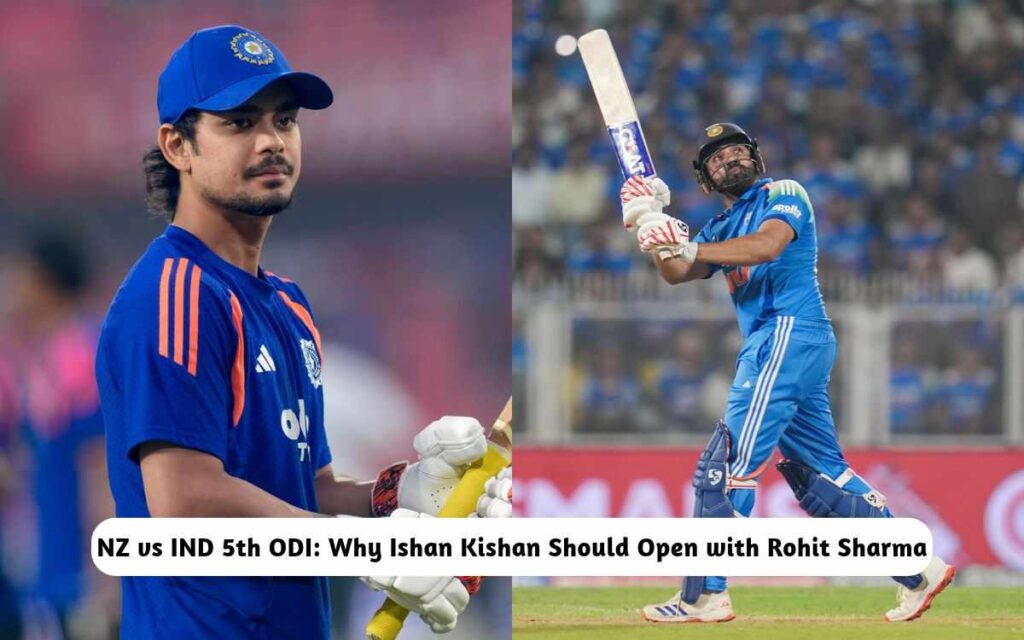
The 5th ODI will be played at the same venue. India have to win the final match to win the series. Ishan Kishan didn’t open last time, he batted at number five. However, he normally opens.
Reason 1: Left and Right Opening Line-Up
India’s top three batters were all right-handers, and Matt Henry was bowling straight and got through them. Having a left-handed opener would force New Zealand to change their lines and lengths.
Shubman Gill cannot play so Ishan looks like a good option. So Ishan Kishan should open with Rohit Sharma.
Reason 2: Aggressive Batsman
Ishan likes to attack the bowler and put them under pressure in the powerplay. Shubman Gill and Ruturaj Gaikwad are both quite calm at the top. Ishan can immediately attack the opposition.
His style also means that Rohit can settle in before accelerating. He has been in awesome T20 form recently and has even reached number one in the T20I rankings.
Reason 3: Has Experience Opening
Ishan normally opens and has done so for most of his career. Recently, he hit a half-century in only 27 balls in the 5th T20I against New Zealand.
If he is moved up, then Ruturaj Gaikwad can bat at number four or five. He has scored well at number four in the past and can anchor the middle order.
What This May Mean For India
It can improve their powerplay batting and have a left- and right-handed opening. It can also strengthen their middle order.
This is just an expert opinion from experts. The team management will announce the playing XI on match day. However, our analysis shows that Ishan Kishan should open with Rohit Sharma.