





Last Updated: July 6, 2026 04:25 PM
India’s recent T20I performances have raised serious questions about team composition. India’s Downfall in T20I cricket happened after the World Cup victory. Shreyas Iyer became captain recently replacing Suryakumar Yadav. Multiple structural issues are contributing to India’s recent poor performance now.
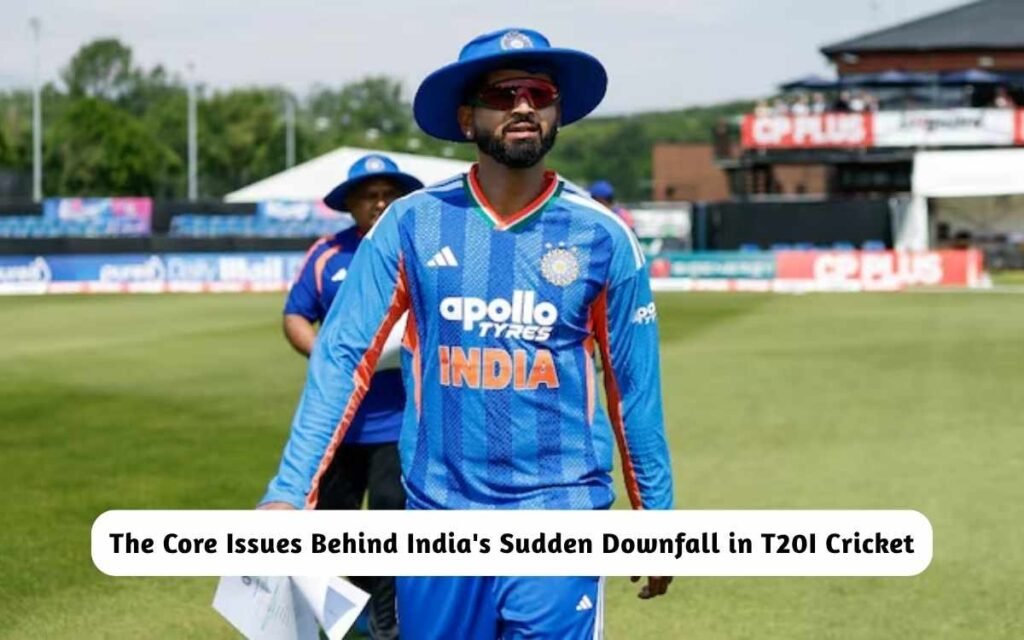
Let’s understand the core issues behind India’s Downfall in T20I cricket. Not just captaincy change causing problems but team composition balance. Cricket experts are analyzing India’s struggles in international T20 cricket today.
Too Many Left-Handed Batters
India’s current T20I team has excessive left-handed batters playing there. Vaibhav Sooryavanshi, Ishan Kishan, Tilak Varma and Shivam Dube are left-handed batsmen. Abhishek Sharma, Axar Patel and Washington Sundar are also left-handed players overall.
Shreyas Iyer stands as the primary right-handed batter in the lineup. This creates a one-dimensional batting approach affecting India’s Downfall in T20I. During the England match, Shreyas was only right-handed in the top seven. Opposing teams can plan a strategy more easily against this lineup.
Balanced right-left combination forces bowlers to adjust lines constantly during a match. Variety in batting order provides better tactical flexibility for the team. India needs more right-handed batters to balance the squad.
Lack of Genuine All-rounders
India fields several players labeled as all-rounders in the squad. Shivam Dube, Abhishek Sharma and Suryansh Shedge are strong with the bat. But these players are not reliable bowling options for the team. Axar Patel and Washington Sundar are valuable bowlers but have weak batting skills.
Harshit Rana was primarily selected as the fast bowler for the team. But he has made stronger batting contributions than some all-rounders. India needs genuine all-rounders who contribute with bat and ball. Players must be very dependable both batting and bowling.
Currently, too many specialists are labeled as all-rounders in the team. This creates an imbalance affecting India’s Downfall in T20I performances.
Difficulty in Overseas Conditions
India played extended home cricket after the Australia tour in 2025. The team dominated the home bilateral series and IPL in various conditions. India won the T20 World Cup 2026 on home soil completely. Transition to overseas conditions proved very challenging for the squad.
In Ireland, different pitches contributed to the 2-0 series defeat. In England, India struggled to post 200-plus totals. The team faced batting difficulties and lost matches consistently there. Prolonged exposure to home conditions reduced overseas readiness significantly.
India’s Downfall in T20I was caused by adaptation issues there. Foreign playing conditions require a different approach and preparation always. The extended home season has reduced the team’s international readiness completely now.
Solutions for India’s T20I Cricket Revival Strategy
India must correct the team balance and composition in the squad. Adding more right-handed batters will improve batting flexibility there. Selecting genuine all-rounders capable of both disciplines is needed. Extended overseas tours before major events would help the team.
Alternating home and away cricket prepares players much better overall. Better adaptation to different overseas conditions is essential for success now. India’s Downfall in T20Is can definitely be reversed with changes.